

Learning about video games
We have digital media literacy, so why not video game literacy?

LFG: Learning from Games is a series dedicated to making the complex world of video game research just a little easier to understand. I post one about 2-3 times a month in between my Science Shorts and Coming Soon series. LFG #36 is about how we might better understand the most common form of interactive media: video games.
👋🏼Hello JOMT Reader!
September is back-to-school for my family. As I read and re-read their curricula for the 1894th time, one part always stands out: digital media literacy. My kids’ schools follow a four principle, nine framework topic definition of digital media literacy that has too many classifications for my liking. But there’s a key form of media that I think is overlooked in this definition: video games.
The key difference between digital media in the framework used by schools and video games lies in the interactive nature of video games. Digital media literacy is about how to consume, interpret, and engage with content that is served to us. Because we can affect the outcomes of video games, video game literacy isn’t just about consuming content. It’s about how our actions within the game fit into the narrative of the game and how it might translate to the real world.
In a world where a majority of kids are exposed to games at a young age, it’s surprising that schools haven’t developed frameworks for learning about video games. As fun and engaging and effective as video games might be in the classroom, it’s equally important to understand the risks of using them.
So, have a cuppa and let’s explore how we might teach and learn about video games.

🩻A framework for learning about video games: categories
What about video games should we learn? With close to 5 million video games to choose from and a growing number of titles added to the total every year, learning about games individually is not feasible. This is where categorizations of video games helps funnel the millions into a manageable few.
Most of us (myself included) would jump to genre classifications as an easy way to manage the millions of titles. It’s a good start, but what is a teachable difference between action vs. adventure games? Or turn-based vs. strategy games? Often, the lines between these genres are blurred as game developers find new and exciting ways to combine genres into a single game.
One thought is to categorize games by what they make us, the players, do. According to Roger Caillois in his book, Man, Play and Games, there are four main types of games grouped by what they make us do:
Competitive games: Games where players compete against each other to win
Chance games: Games where outcomes are determined by luck rather than skill or strategy
Role-playing games: Games where players adopt roles and create fictional scenarios
Sensory experience games: Games that alter the player’s perception through rapid movement or other disorienting experiences
The first thing you might be thinking is that these are too broad and not useful. How can a beautiful game like Hollow Knight be stuffed into one of these crude categories? Here’s my twist and answer: why don’t we stuff it into all of these categories? When we do, it might look something like this:
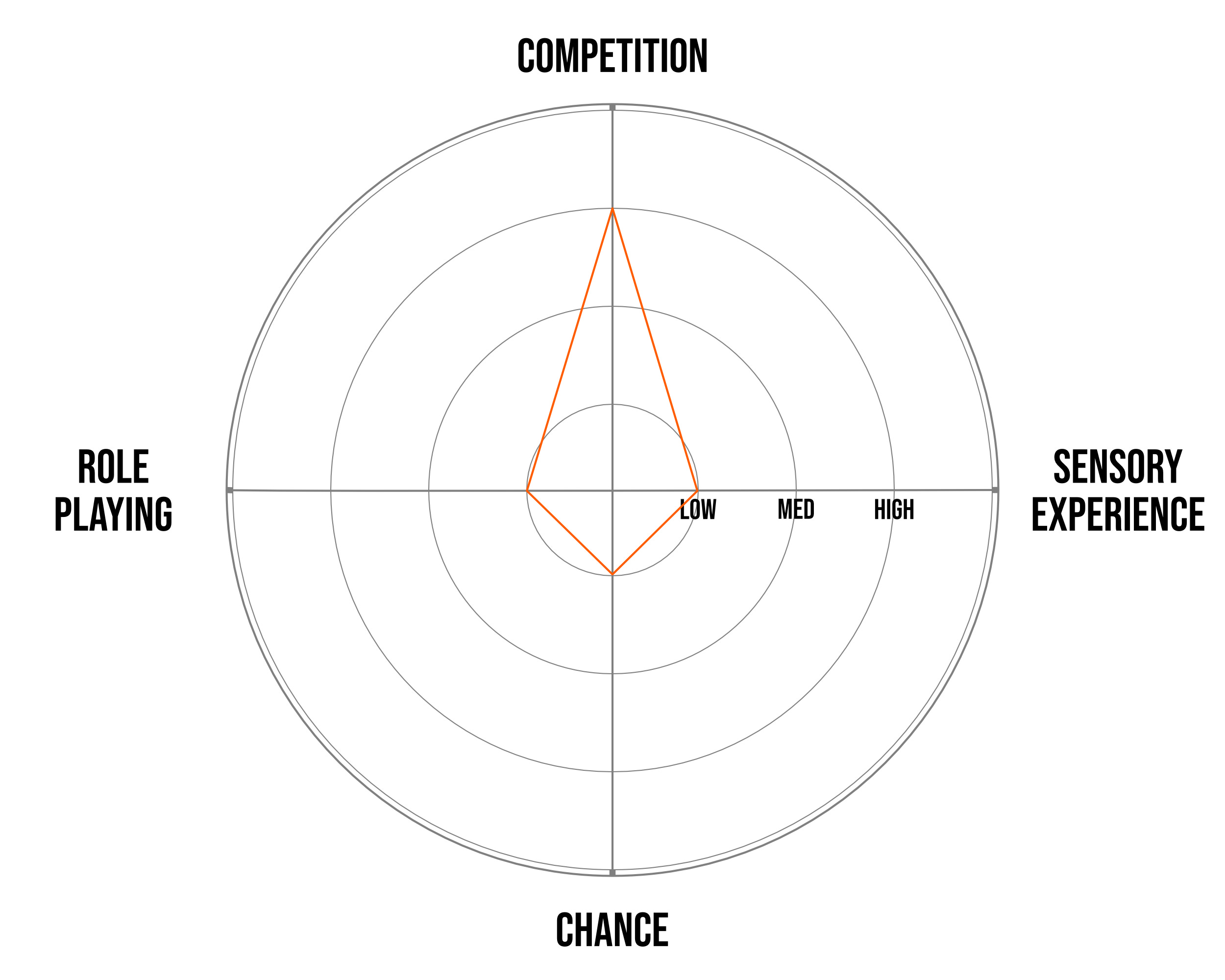
There’s no element of “compete against each other” in Hollow Knight, so why did I score it so high in the competition category? I cheated a little and widened the meaning of “each other” to include your past self. In metroidvania games, you’re developing skills to compete against your past self that could not get past a certain stage or level. The radar graph for a Souls-like or first-person shooter game would also look very similar to this one.
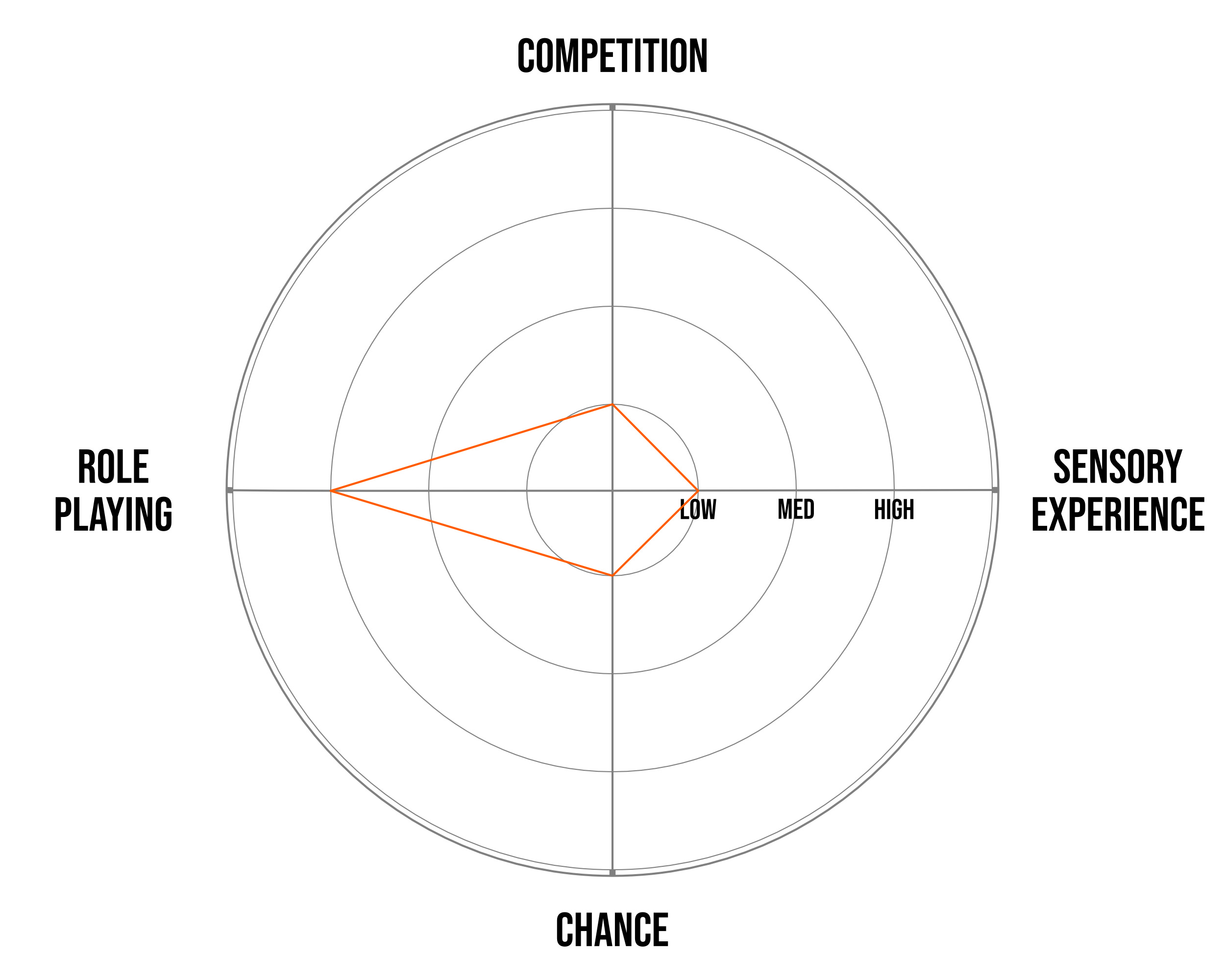
By contrast, role-playing games look like this:
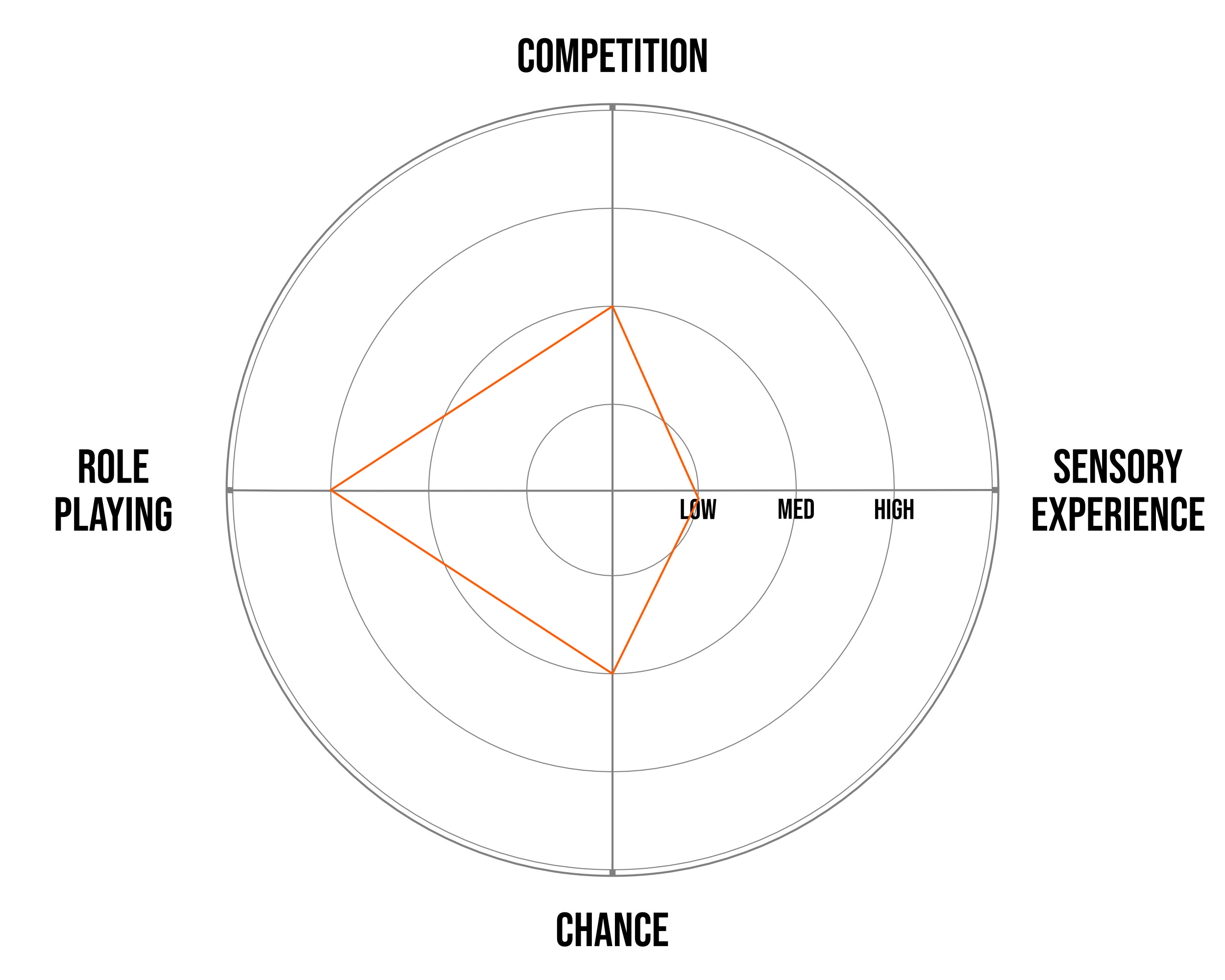
While strategy games look like this:
And sports games look like this:
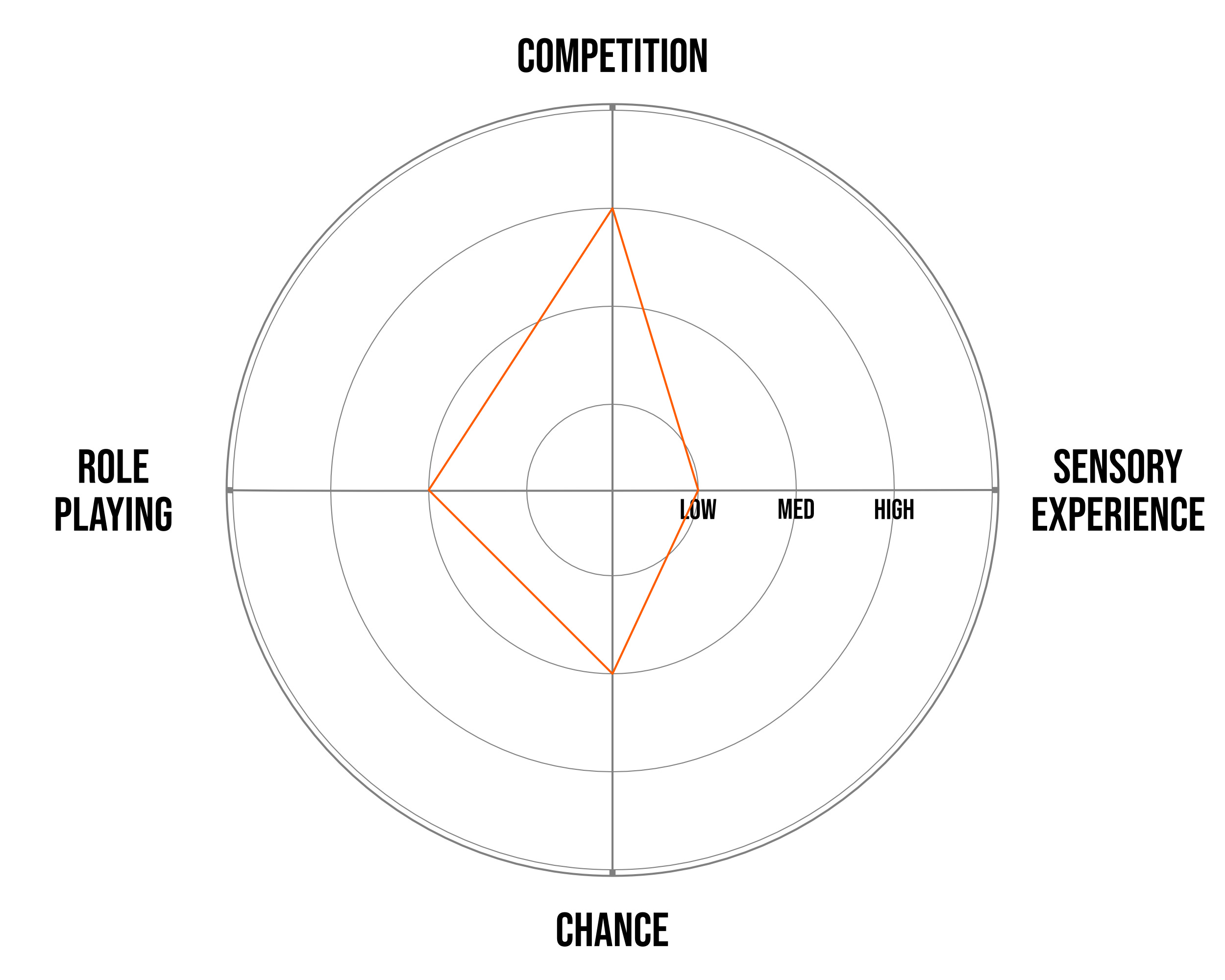
The point is, combining game genres and these categories allows us to group games by teachable differences. How we think about competitive games is different from role-playing games and games based on chance. But we might not have gotten there if we stopped at traditional game genre classifications.
📖A framework for learning about video games: literacy
Now that we’ve categorized video games into manageable chunks, we can start applying the second layer of frameworks: literacy. For this framework, we turn to the work of Australian researcher Bill Green, who proposed that literacy of any subject is the combination of three dimensions (I’ve added the video game twist to them, even though it wasn’t proposed that way originally):
The operational dimension of literacy is about understanding the rules of a video game. In practical terms, it refers to the ability to be able to play and/or to design games.
The cultural dimension of literacy is about recognizing where a video game fits in society and in culture. In practical terms, it refers to knowledge or familiarity with other games, movies, or literature that help the player understand the video game on a deeper level.
The critical dimension of literacy is about analyzing, questioning, and evaluating elements of the video game to uncover hidden messages. In practical terms, it refers to the ability to examine how the operational (mechanics) dimension of a game might support the cultural dimension and how all of that might be applied in the real world.
The shape of the radar graph determines how we talk about operational literacy. For example, games that score high in competition can be explained through the way they make you compete against an opponent including yourself. Similarly, role-playing games and simulation games can be explained by how they let you step into the role of a character.
The traditional genre classifications become important with cultural literacy. A game like Hollow Knight: Silksong can be understood through its predecessor Hollow Knight, or other metroidvanias. But the Hollow Knight games won’t translate well to other operationally similar genres like first-person shooters. FPSs have their own social and cultural contexts.
Together, operational and cultural literacies can reveal hidden meanings and strategies in a game. Sometimes, this is called theorycrafting, which is the process of dissecting a game’s mechanics and systems to uncover optimal strategies. Theorycrafting is common in games with tons of item customizations/combinations like Diablo and Division.
🏫Video games in the classroom?
Let’s be honest: we’re likely not going to see a full class dedicated to video games any time soon. At most, it’ll be a small part of an arts and media class. But the framework above might help to make sense of the vast ocean of available video games.
My not-so-secret hope is that video game literacy is discussed before a video game is introduced in the classroom. The rush to introduce a fun and cool tool (video games) shouldn’t outweigh the need to have an honest conversation about the benefits and risks of video games.
In theory, the framework is robust enough to work for any game released in the future. But as with all frameworks, it will require tweaking as we continue to learn more about how this social and cultural phenomenon that is video games.
If you want to read the article that inspired this post, you can read it here for free: https://repozitorij.vern.hr/islandora/object/vern%3A3644
Please keep in mind, these are thoughts based on how I understand the literature as a researcher and enthusiast, not as a formal educator. If you are an educator, I’d love to hear your thoughts on the matter! Am I totally off base?
If you liked what you read, please consider giving this post a like and sharing it with your community!
Love the radar graph! But I'm interested in some limitations to it. Because I'm pretty sure you can just max out on the entire graph. How much I can't, though? And what are the conclusions starting from this point?