

Playing games to become efficient thinkers
Optimizing thought processes with games

LFG: Learning from Games is a series dedicated to making the complex world of video game research just a little easier to understand. I post about twice a month in between my Science Shorts, Coming Soon, and Impressions series. Welcome to LFG #02-2026, where I explore the potential for video games to improve our decision-making abilities.
👋🏼Hello JOMT Reader!
Every action we take whether it be walking, catching a ball, or performing life-saving surgeries, is a series of decisions we make based on what we sense about the world.
We may choose to take a different path after sensing danger on our path ahead.
We might decide to let the ball bounce before catching it.
And as a doctor, we might choose to approach a surgery differently after taking a look inside the body.
There is a lot happening in the brain before we make that final decision to act. We have to sense the world around us. Then we have to process that information and weed out the information we don’t need or want. Next, we have to match that information to what we already know. And finally, we decide on an action to take based on the thought process that came before.1
Sometimes, all of that happens in a heartbeat.
But what if you could speed up that thinking even more?
In this issue of LFG: Learning from Games, we’ll explore some new research that suggests our brains can be trained to become more efficient at decision making through video gaming.
Let me explain.

The positive effects of playing video games
Research over the past decade or so has shown how video games, especially action video games, can improve a number of brain processes. Some of these highlights include:
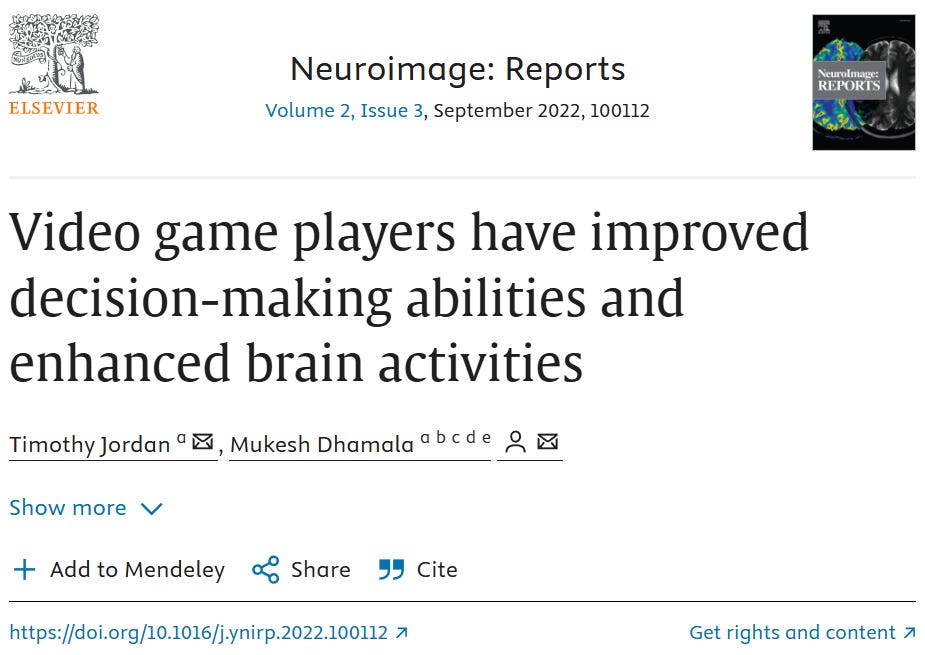
Faster reaction times in people who play video games
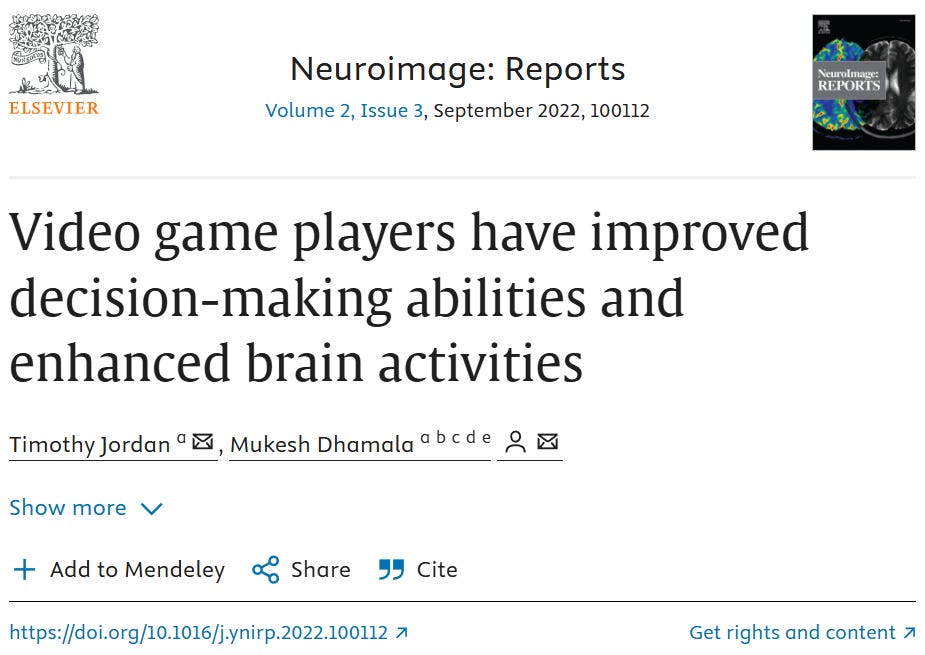
Enhanced ability to filter out distractions in those who play video games
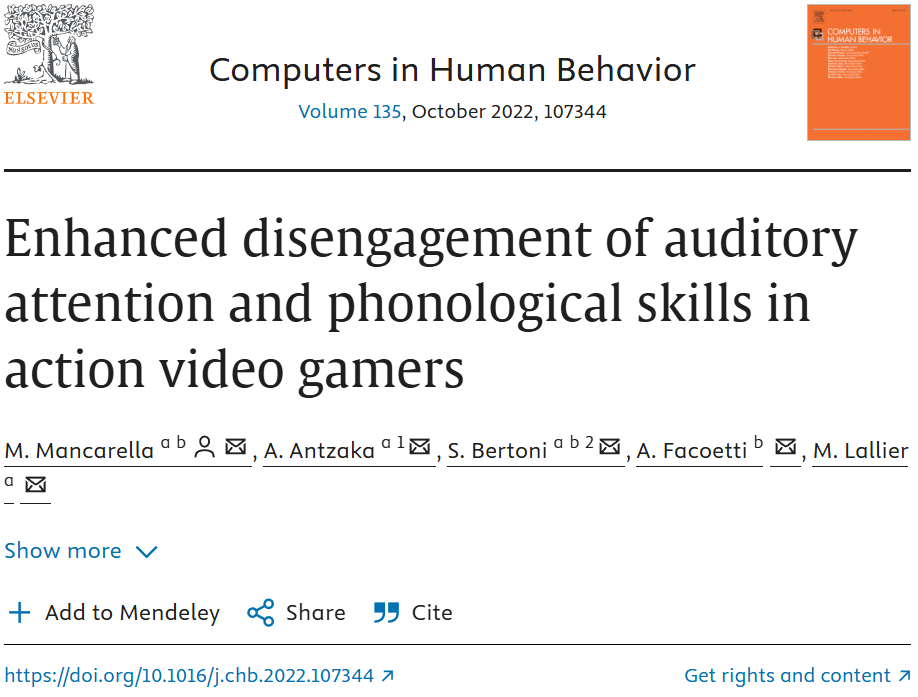
Faster rate of learning hand-eye coordination skills in those who play video games
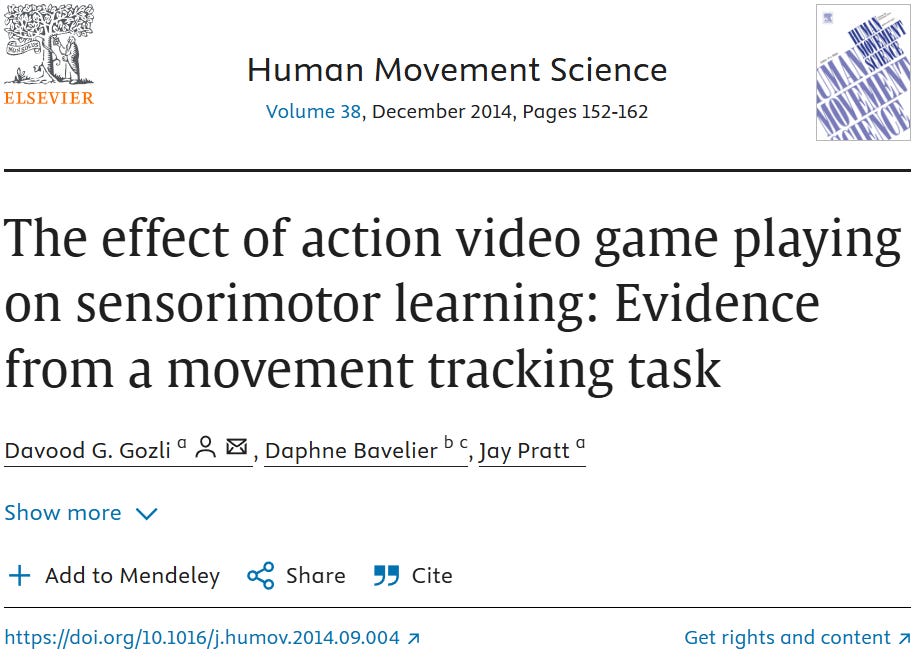
Increased ability to switch between thinking about different things in those who play video games


These improvements in brain-related processes aren’t limited to lab experiments. Researchers have documented improvements in real world tasks like performing a surgery2, driving3, reading4, and military training5.
Based on all of this research, we know that video games affect real world tasks (the what) through improvements in a variety of brain functions (the where and why).
But perhaps the most important question, the how, remained a mystery.
Until now.
Video games improve thinking efficiency
To answer the question of how video games affect our brain function, researchers looked inside the brain to see which parts were active when participants were playing a game-like test. The comparisons were made between those who played action video games for more than 5 h per week (gamers) and those who played less than 30 min of video games per week (non-gamers).
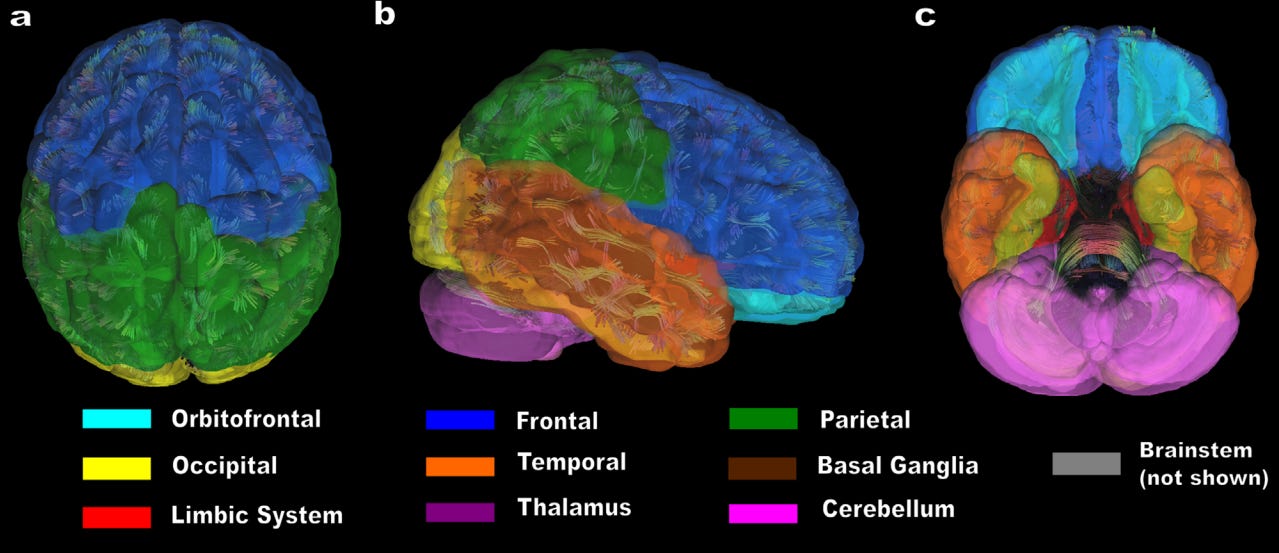
Different parts of the brain above become more or less active depending on what you are thinking about. By linking what someone was doing to the parts of the brain that were active, researchers could “see” the thought process. And maybe most importantly, the speed of change in active brain areas could indicate the speed of thought.
Before talking about what the researchers found, it’s worth noting how they defined action video games. According to these researchers an action video game fell into one of these genre categories: first-person shooter, real-time strategy, multiplayer online battle arena, or battle royale. It’s because all of these genres provide a similar fast-paced and rich environment that demands focused attention and quick reaction times.
A big side note:
One of the reasons why I think we need a much better game categorization system is highlighted by the researchers’ definition of action video games. RTS is a genre not normally grouped together with FPS and MOBA games. It’s probably fair to say not all RTS games are the same. And there are notable omissions too. What about action-adventure games and platformers? Don’t they provide a fast-paced and information-rich environment requiring quick reaction times?
When the researchers looked at the patterns of brain activity, they found that gamer brains processed information faster, which shows up as improved reaction times. If we take a look at the simplified, four-step thought process:
Sense the world
Process information and weed out irrelevant information
Match information to what we already know
Act
Gamer brains get from steps 1 to 4 faster than non-gamer brains. Non-gamer brains spend more time sensing the world and processing that information, probably because they aren’t used to sorting through a lot of information at once. But gamers, especially the action gamer, are constantly bombarded with game information that they have to sort through to decide on an action.
Over time, gamer brains become better at anticipating the chain of events that could follow, allowing them to sort, process, and match information faster. That shows up in the real world as improved reaction times.
Does this only work with action video games?
My guess is no. And it has to do with how action video games were defined by the researchers. The key characteristics of video games relevant for this study was that it was fast-paced, had lots of dynamic information that requires processing, and required quick thinking and reflexes.
Plenty of other genres, including platformers, endless runners, and action-adventure games have these characteristics. Even some turn-based games, especially ones where the turns run more fluidly (think Crypt of the Necrodancer or Quasimorph) have the same effect as these action video games. And if you play a traditionally slower-paced turn-based game with turn timers (like blitz chess), you could turn it into a fast-paced adventure.
As with all guesses, we’ll need some more studies like this to see what effect other types of games can have on the brain. But one thing is clear, a healthy gaming diet, especially one that includes faster-paced games can improve how you think in the real world! So what are you waiting for, go play some games!
If you want to read the article that inspired this post, you can read it here for free: https://direct.mit.edu/imag/article/doi/10.1162/IMAG.a.1090/134559/Level-up-the-brain-Novel-PCA-method-reveals-key
If you liked what you read, please consider giving this post a like and sharing it with your community!
https://asana.com/resources/decision-making-process
It’s Asana and there are 7 steps, not 4, but I’ve combined some of the steps into one, for the sake of simplicity.
https://www.sciencedirect.com/science/article/abs/pii/S1931720410000383
This a review article titled Video Games and Surgical Ability: A Literature Review.
https://www.sciencedirect.com/science/article/pii/S1369847823001535
This is a research article titled Do action video games make safer drivers? The effects of video game experience on simulated driving performance.
https://academic.oup.com/cercor/article/34/4/bhae152/7644538
This is a research article titled Action video games and posterior parietal cortex neuromodulation enhance both attention and reading in adults with developmental dyslexia.
https://www.tandfonline.com/doi/full/10.1080/08995600903417225
This is a research article titled Are Soldiers Gamers? Videogame Usage among Soldiers and Implications for the Effective Use of Serious Videogames for Military Training.
Ok so another way of interpreting this, is that fast action paced videogames lead to pattern recognition using at least three of our senses. Which in turn lead to being more efficient thinkers